
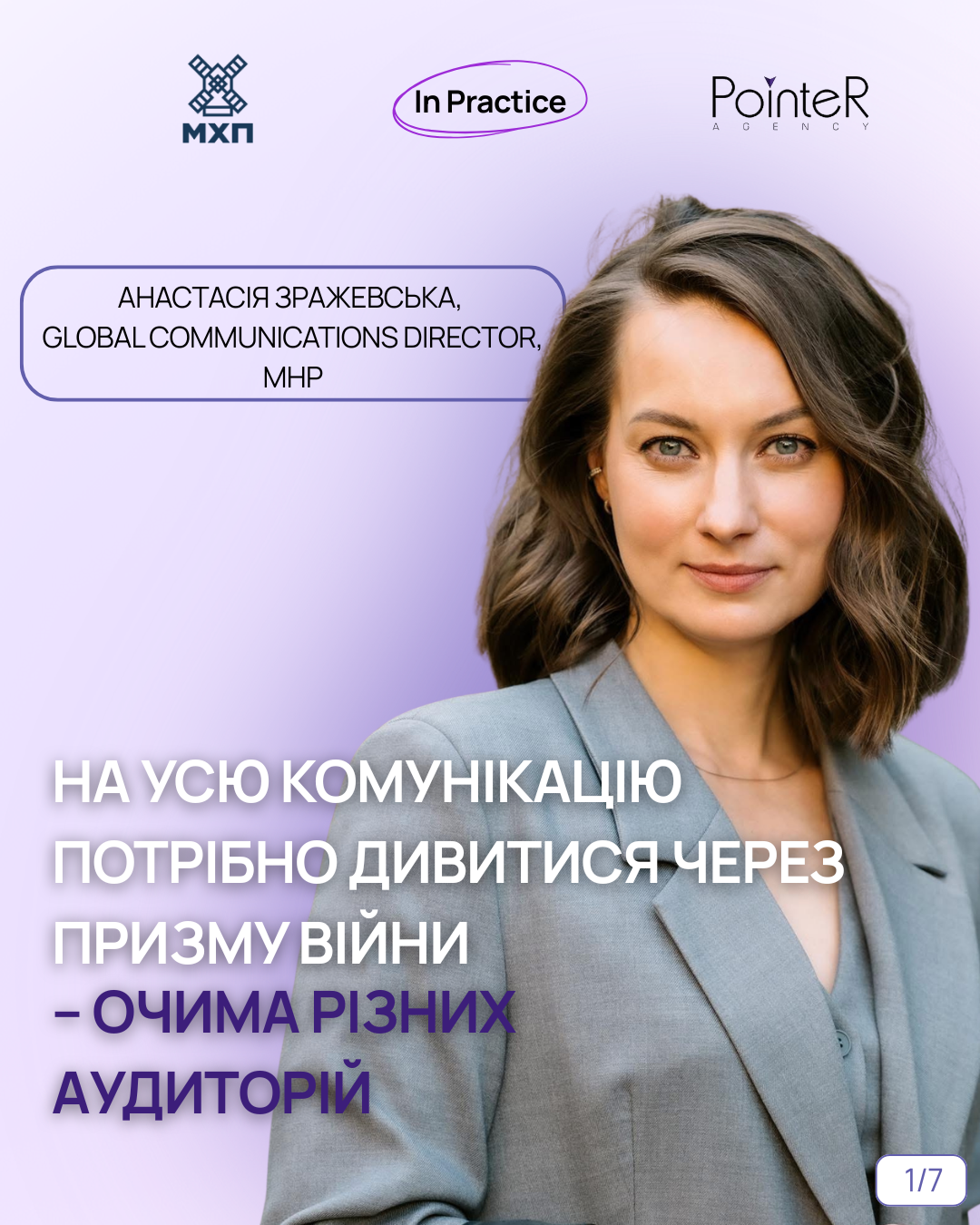
Анастасія Зражевська, Global Communications Director, MHP (серед брендів – «Наша Ряба», «Бащинський», «Легко!», «Skott Smeat»), – про комунікацію крізь призму емоційного стану людей, як diversity у команді допомагає уникати помилок та чому бізнесу необхідно підтримувати культуру.
📍У рубриці In Practice говоримо з комунікаційниками та маркетологами компаній – клієнтами агенції – про те, на чому тримати фокус й які смисли закладати у комунікації.
На що в комунікаціях ви зараз звертаєте найбільше уваги? І на що радите особливу увагу звертати іншим?
Люди сьогодні по-іншому сприймають те, що роблять та говорять бренди чи компанії. Здавалося б, ми говоримо про це від початку повномасштабної війни, але за останні кілька місяців ця тенденція посилилась. Сьогодні контекст важливий як ніколи.
Що я маю на увазі? Те, як люди сприймають інформацію крізь призму війни, втоми і постійного стресу. Реакції стали набагато гострішими. Те, що раніше сприйняли б спокійно/нейтрально, зараз за рахунок контексту може викликати обурення.
Необхідно дивитися на комунікацію очима різних аудиторій. Не просто різних споживачів, а саме різних аудиторій. Очима військового і його родини, ветерана, людини, яка усю ніч просиділа в укритті, а зранку прийшла на роботу, мами, чия дитина сидить в шкільному укритті вже кілька годин… Думати, як люди сприймуть дії компанії чи меседжі.
Тут сильно виручає diversity в команді – різноманітність людей з різним досвідом, поглядами та життєвими ситуаціями. Зрозуміло, що у комунікаційних командах ми не можемо досягти максимальної різноманітності, бо команди не такі великі, але в компанії загалом можемо. Тому перед стартом важливих проєктів чи комунікацій (внутрішніх та зовнішніх) варто показати їх фокус-групам з учасниками з максимально різними профайлами.
Який проєкт минулого року став для вас найціннішим з точки зору смислів? І спрацював краще, ніж ви очікували?
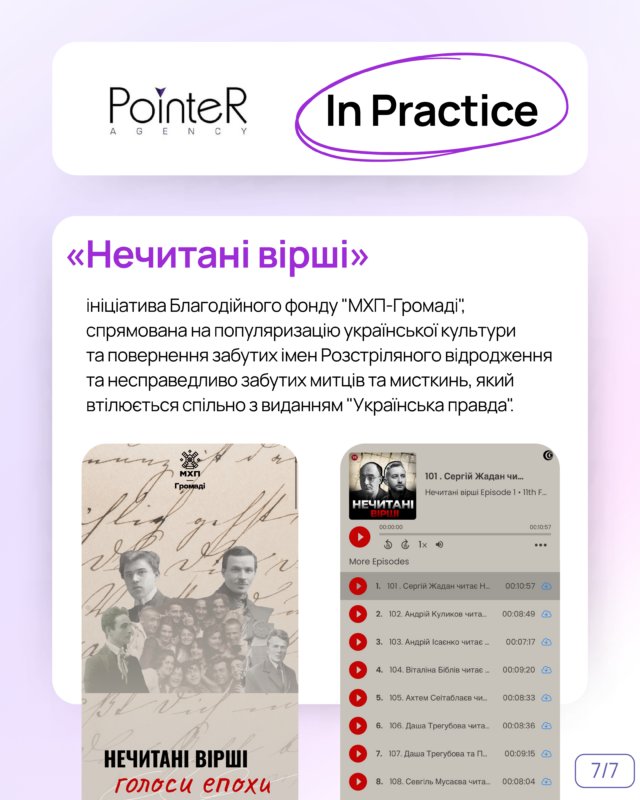
Це культурний проєкт МХП «Нечитані вірші».
Наша компанія системно підтримує культуру – багато років і в різних напрямках. Але це перший проєкт, коли акцентували увагу не на відомих особистостях, а на тих, хто несправедливо забутий через імперську політику Радянського Союзу, яка у більшості випадків фізично знищила цих людей.
Спільно з літературознавцями ми обрали вірші забутих поетів, як Майк Йогансен, Ладя Могилянська, Амді Гірайбай, Леонід Чернов. Для нас було важливо знайти саме ті твори, які несуть літературну цінність і які мають знати українці. Відібраним віршам «дали голоси» військові, ветерани, школярі з усієї України та відомі українці: Ахтем Сеітаблаєв, ONUKA, Олена Тополя, Даша Трегубова, Олена Кравець, дипломат Дмитро Кулеба, парамедикиня Юлія «Тайра» Паєвська, головна редакторка «Української правди» Севгіль Мусаєва, співзасновник музичної премії YUNA Павло Шилько, волонтерка Тата Кеплер, лауреатка Нобелівської премії миру Олександра Матвійчук. Наші співробітники також ставали амбасадорами проєкту та записували відео для своїх соцмереж.
Що спрацювало краще за очікування? Цей проєкт був фактично із нульовим бюджетом (єдине, на що були витрати, – спецпроєкт з «УП»). Усі згадки та поширення з’явились тому, що українцям сьогодні важливо повертати своє, пишатись українським.
Ключове для нас – бізнес має підтримувати культуру. І несправедливо думати, що це не на часі, адже саме за ці цінності ми й боремося.
English below
Anastasia Zrazhevska, MHP: All Communication Must Be Viewed Through the Lens of War — Through the Eyes of Different Audiences
Anastasia Zrazhevska, Global Communications Director at MHP (home to brands including Nasha Ryaba, Bashchynsky, Lehko!, and Skott Smeat), on communicating through the prism of people’s emotional reality, how diversity within a team helps avoid costly mistakes, and why businesses have a responsibility to support culture.
In our In Practice series, we speak with communicators and marketers from our client companies about where to focus their attention and what messages to embed in their communications.
What do you pay the most attention to in communications right now — and what would you encourage others to focus on?
People today perceive what brands and companies say and do very differently than they used to. We’ve been talking about this since the full-scale invasion began, but the trend has intensified significantly over the past few months. Context has never mattered more.
What do I mean by that? I mean the way people process information through the lens of war, exhaustion, and constant stress. Reactions have become far sharper. Things that might once have been received calmly — or neutrally — can now spark genuine outrage, simply because of the context we’re all living in.
You have to look at your communication through the eyes of different audiences. Not just different consumers, but genuinely different audiences. Through the eyes of a soldier and their family. A veteran. Someone who spent the entire night in a bomb shelter and showed up to work the next morning. A mother whose child has been sitting in a school shelter for hours. You have to think about how people will receive what your company does and says.
This is where diversity within your team becomes invaluable — a real mix of people with different experiences, perspectives, and life situations. In communications teams, you obviously can’t achieve maximum diversity because the teams simply aren’t large enough — but across the company as a whole, you can get closer. That’s why, before launching major projects or communications (internal or external), it’s worth running them by focus groups made up of people with as wide a range of profiles as possible.
Which project from last year felt most meaningful to you in terms of the ideas behind it — and outperformed your expectations?
That would be MHP’s cultural project, Unread Poems.
Our company has been supporting culture systematically for many years and across many different areas. But this was the first project where we deliberately shifted focus away from well-known figures and toward those who have been unjustly forgotten — largely because Soviet imperial policy physically destroyed them.
Working with literary scholars, we selected poems by forgotten poets such as Mykhailo Johansen, Ladya Mohylanska, Amdi Hiraybay, and Leonid Chernov. It was important to us to find works that carry genuine literary value — poems that Ukrainians deserve to know. Those poems were then given voices by soldiers, veterans, schoolchildren from across Ukraine, and prominent Ukrainians including Akhtem Seitablayev, ONUKA, Olena Topolya, Dasha Trehubova, Olena Kravets, diplomat Dmytro Kuleba, paramedic Yulia “Taira” Payevska, Ukrainska Pravda editor-in-chief Sevhil Musayeva, YUNA music award co-founder Pavlo Shylko, volunteer Tata Kepler, and Nobel Peace Prize laureate Oleksandra Matvichuk. Our own employees became ambassadors for the project too, recording videos for their personal social media channels.
What exceeded our expectations? This project ran on virtually no budget — the only real cost was a special feature with Ukrainska Pravda. Every mention and every share happened organically, because Ukrainians today deeply want to reclaim what is theirs and take pride in their own culture.
The core belief for us is this: business must support culture. And it would be a mistake to think that’s a luxury for peacetime — because these are precisely the values we are fighting for.
